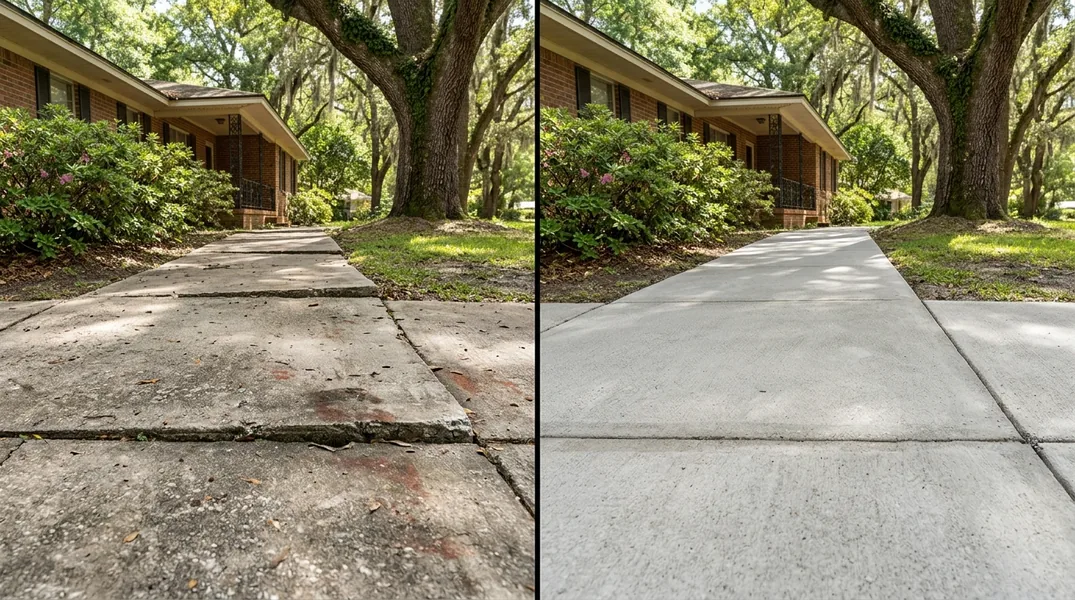
Understanding Tallahassee's Unique Soil Composition
Tallahassee sits in a region with one of the most challenging soil profiles in Florida. The area is dominated by two primary soil types: red clay and karst sand. Red clay is dense, heavy, and prone to significant volume changes as it absorbs and releases moisture. Karst sand, by contrast, is loose and sits atop a limestone bedrock riddled with underground cavities and dissolved channels. Together, these geological features create a perfect storm for concrete problems that homeowners don't always anticipate.
When you build a Concrete Driveway in Tallahassee, the foundation it sits on matters as much as the concrete itself. Unlike areas with stable, compacted soil, the red clay beneath your driveway is constantly moving. During wet seasons, clay expands as it absorbs water. During dry periods, it shrinks and pulls away from the concrete slab. This cyclical movement places enormous stress on your concrete, leading to cracks, settlement, and eventually structural failure if left unaddressed.
Red Clay Concrete Cracking in Tallahassee: Why It Happens
Red clay concrete cracking in Tallahassee is one of the most common issues we see at Tallahassee Concrete Pros. The problem starts with the nature of clay itself. Clay particles are extremely fine and have a high affinity for water. When the rainy season arrives, your driveway's base absorbs moisture, causing the clay to swell upward. This upward pressure creates stress on the concrete slab above. Conversely, when the weather turns dry, the clay shrinks, creating voids beneath the slab. The concrete, now unsupported, sags into these voids and cracks under its own weight.
The cracks often appear in predictable patterns. You might notice diagonal cracks radiating from a central point, or long linear cracks running the length of your driveway. Some homeowners see a series of small cracks that eventually connect into larger breaks. The severity depends on how much the underlying clay moves and how well the original concrete was installed. A poorly compacted base layer will experience more dramatic movement and cracking than a properly prepared foundation. This is why proper site preparation is absolutely critical when installing new concrete in this region.
Sandy Soil Slab Settlement and Sinkhole Risks
While red clay causes expansion and contraction, the karst sand beneath much of Tallahassee presents a different but equally serious threat: sudden settlement and sinkholes. Karst topography is created by the dissolution of limestone over thousands of years. This process leaves behind a honeycomb of cavities, channels, and weak zones in the bedrock. Sandy soil slab settlement occurs when these underground voids gradually enlarge or collapse, causing the soil above to drop. Your concrete driveway, sitting on this unstable foundation, can suddenly settle unevenly, creating depressions, step-offs, and dangerous trip hazards.
Sinkhole concrete damage is perhaps the most dramatic outcome of karst geology. A sinkhole can form suddenly, swallowing a section of your driveway overnight. Even if a full sinkhole doesn't develop, smaller subsidence events can crack and break your concrete. The challenge is that you often cannot see the problem developing underground until it's too late. This is why homeowners in areas with sandy soil and karst bedrock should be especially vigilant about monitoring their driveways for signs of settlement, such as low spots, edge drops, or areas where water pools after rain. Early detection can sometimes prevent catastrophic failure.
Signs Your Concrete Needs Repair in Tallahassee
Knowing when to seek Concrete Repair & Resurfacing is essential for protecting your investment. The first warning sign is usually cracking. Small surface cracks are cosmetic but can allow water to penetrate, accelerating damage. Wider cracks (more than a quarter inch) indicate deeper structural issues. Look also for spalling, where the concrete surface flakes or chips away, and for areas where the concrete has settled unevenly. If one section of your driveway is noticeably lower than an adjacent section, you likely have a settlement problem caused by soil movement or subsidence.
Water pooling on your driveway after rain is another red flag. Proper concrete should shed water efficiently. Pooling indicates that sections have settled and created depressions. Over time, standing water seeps into cracks and accelerates deterioration. Additionally, pay attention to the edges of your driveway. If you notice that the edges are lifting or that there are gaps between the concrete and the ground, the base soil has likely shifted. Any of these signs warrant a professional inspection. Ignoring them allows problems to worsen, making repairs more expensive and more extensive. The sooner you address damage, the better your chances of preserving your driveway's functionality and appearance.
Preventing Soil-Related Concrete Problems: Best Practices
Prevention is always better than repair when it comes to concrete in challenging soil conditions. The most important step is ensuring proper site preparation before concrete is poured. This means removing organic material, compacting the subgrade in layers, and installing a stable base layer of crushed stone or recycled asphalt. The base should be compacted to at least 95 percent of its maximum density. In areas with clay, adding a layer of sand or gravel between the clay and the concrete can help absorb some of the movement and reduce stress on the slab.
Drainage is equally critical. Water is the enemy of concrete sitting on unstable soil. Make sure your driveway slopes slightly so water runs off rather than pooling. If your property has poor natural drainage, consider installing a French drain or gravel swale alongside your driveway to direct water away from the concrete. Sealing your concrete with a quality concrete sealer every two to three years protects the surface from water infiltration and extends the life of your driveway significantly. Finally, avoid planting large trees or shrubs too close to your driveway. Tree roots can destabilize soil and cause settlement, while large trees can also extract moisture from clay, causing excessive shrinkage.
When to Call a Professional for Concrete Repair Near Me
If you've noticed cracks, settlement, or other damage to your concrete, it's time to contact Tallahassee Concrete Pros for a professional assessment. We've worked with hundreds of homeowners in Tallahassee and surrounding areas, and we understand the specific soil challenges that affect concrete in this region. Our team can evaluate the cause of your damage, determine whether repair or replacement is the best option, and recommend solutions that account for your soil type and local conditions.
Repair options range from simple crack filling and sealing to more involved solutions like mudjacking or polyurethane injection, which can raise settled concrete and fill voids beneath the slab. In cases where damage is extensive, replacement may be the most cost-effective long-term solution. We can also install new concrete using best practices specifically suited to Tallahassee's soil, including proper base preparation, reinforcement, and drainage design. Don't wait until a small crack becomes a major structural problem. Call us today at (850) 692-8125 or visit our website to request a free estimate. We serve Tallahassee, Quincy, Havana, Midway, and the surrounding communities, and we're ready to help protect your concrete investment.
Looking for a professional concrete contractor in Tallahassee? Tallahassee Concrete Pros responds fast for all your concrete needs.
Get a Free QuoteOur services: Concrete Driveways · Concrete Patios · Stamped & Decorative Concrete