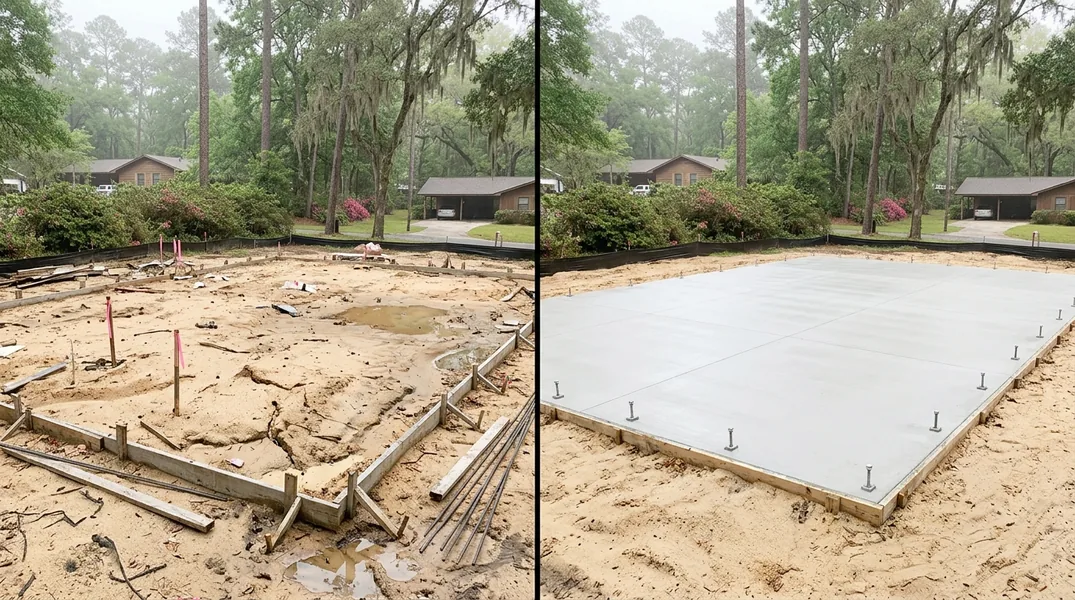
Understanding New Construction Concrete Slabs in Tallahassee
Buying a new home in Tallahassee is exciting, but the foundation literally supports everything that comes after. Most new construction homes sit on a concrete slab, a flat foundation poured directly onto prepared soil. Unlike traditional basements or crawl spaces, slabs are common in Florida and the surrounding region because they're cost-effective and work well in our climate. However, not all concrete slabs are created equal, and understanding what you're buying before you close is crucial.
A concrete slab typically consists of a layer of gravel or sand for drainage, a vapor barrier to prevent moisture intrusion, and then the concrete itself, usually four to six inches thick. The quality of each layer matters tremendously. Poor drainage preparation, inadequate concrete mix, or improper curing can lead to problems years down the road, from cracking to settling to moisture issues. As a homebuyer in Tallahassee, you need to know what to look for and what questions to ask your builder before signing the final papers.
What to Inspect During Your Final Walkthrough
Your final walkthrough is your last chance to catch foundation issues before closing. Walk the entire perimeter of the slab, both inside and outside the home, and look for visible cracks, uneven surfaces, or areas where the concrete appears to be settling. Small hairline cracks are often normal and occur as concrete cures, but larger cracks (wider than one-eighth inch) or cracks that run diagonally can indicate structural stress or poor installation. Pay special attention to areas around door frames, windows, and corners where stress concentrations are highest.
Check for signs of water damage or staining on the concrete surface, particularly in the garage or any utility areas. Efflorescence, a white powdery substance on the concrete, suggests moisture is moving through the slab. While not always a deal-breaker, it indicates potential moisture management issues that could affect your home's long-term durability. Look for any soft spots or areas where your footsteps sound hollow, as this can signal voids beneath the slab. If you notice anything concerning, document it with photos and request that your builder provide written explanation or remediation before closing.
Builder Foundation Inspection: What Your Inspector Should Check
A professional home inspector is essential when purchasing any new construction property. When it comes to the foundation and concrete slab, your inspector should evaluate the slab's overall condition, check for proper grading and drainage around the perimeter, and assess whether any visible cracks or settlement issues are present. They should also verify that the slab appears to be level and that there are no signs of movement or heaving. In the Tallahassee area, where our soil composition can shift with moisture changes, foundation stability is particularly important.
Your inspector should also examine how well the builder has managed moisture control. This includes checking that gutters and downspouts direct water away from the foundation, that the grade slopes away from the home, and that any crawl space vents (if applicable) are functioning properly. Ask your inspector specifically about the vapor barrier beneath the slab and whether they can identify any evidence of moisture problems. Don't hesitate to ask questions about anything in their report that concerns you. A thorough builder foundation inspection protects your investment and gives you leverage to negotiate repairs or credits before closing.
Understanding Your New Home Foundation Warranty
Every new home comes with some form of warranty, but the specifics vary widely by builder and state. Most builders offer a structural warranty that covers the foundation for a set period, typically one to ten years depending on the defect. It's critical that you understand exactly what your new home foundation warranty covers before closing. Does it cover minor settling? Hairline cracks? Water intrusion through the slab? What is the builder's responsibility versus yours? Get the warranty in writing and read every word.
Florida has specific regulations governing builder warranties, and many builders participate in warranty programs that provide additional protection. Ask your builder which warranty program covers your home and request a copy of the warranty documentation during the final walkthrough. Pay attention to the claims process and any time limits for reporting issues. Some warranties require you to report problems within a specific window, so knowing these deadlines protects your rights. If you discover slab issues after closing, your warranty may be your only recourse, so understanding its terms is essential to protecting your new investment.
Common Concrete Slab Problems and When to Call a Professional
Even with careful inspection, concrete slab issues can emerge after you've moved in. Common problems include settlement cracks, which occur as soil beneath the slab compacts over time; heaving, where the slab rises due to soil pressure or frost; and moisture infiltration, which can damage flooring and create mold concerns. Smaller issues might be cosmetic, but larger problems can affect your home's structural integrity and resale value. If you notice new cracks appearing, uneven flooring, or persistent moisture in your garage or basement areas, don't ignore them.
When problems arise, you have options beyond your builder's warranty. Concrete Repair & Resurfacing specialists can assess damage, recommend solutions, and often repair issues that might otherwise worsen. Whether it's filling cracks, addressing settling, or improving drainage around your slab, professional contractors have the expertise to stabilize and restore your foundation. If you're concerned about your new construction slab or notice issues after closing, contact Tallahassee Concrete Pros at (850) 692-8125 for a professional evaluation and free estimate.
Questions to Ask Your Builder Before Closing
Arm yourself with knowledge by asking your builder specific questions about the concrete slab before closing day. Ask about the concrete mix design and strength rating (typically measured in PSI). Ask whether a vapor barrier was installed and what type. Request information about the base preparation, including soil testing and compaction procedures. Ask about the curing process and how long the concrete was allowed to cure before construction continued on top of it. These details reveal whether the builder took foundation seriously or cut corners.
Don't be shy about asking for documentation. Request copies of the concrete supplier's certifications, any soil testing reports, and the warranty details. Ask your builder about their process for addressing any slab issues that arise during the one-year warranty period. Finally, ask whether you can have an independent inspector evaluate the slab before closing, and insist on it if you have any concerns. Builders who stand behind their work typically welcome professional inspections because they demonstrate quality. If a builder resists inspection or refuses to answer questions about foundation details, that's a red flag worth taking seriously before committing to your purchase.
Looking for a professional concrete contractor in Tallahassee? Tallahassee Concrete Pros responds fast for all your concrete needs.
Get a Free QuoteOur services: Concrete Driveways · Concrete Patios · Stamped & Decorative Concrete